The Helderberg
A First-Person Memoir of the Disaster and Investigation
A True Account by
David Barras-Baker.
Senior Co-ordinator Cabin Safety – 1985-1989
Chapter 1
The Flight That Should Have Been Just Another Flight
Seattle, 1980 – The Birth of The Helderberg
In the beginning, The Helderberg was pristine.
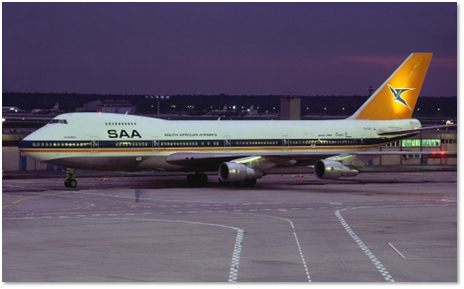
I remember the first time I saw her, standing on the tarmac in Seattle, a brand-new Boeing 747-244M Combi, straight from the factory.
Her paintwork gleamed under the Pacific Northwest sky, the South African Airways Flying Springbok logo crisp and untouched by time.
She was perfect.
None of us could have known then that, seven years later, she would be lying in pieces at the bottom of the Indian Ocean.
That she would become one of aviation’s greatest mysteries.
That she would take 159 souls with her, leaving behind nothing but questions.
I was part of the delivery team assigned to bring her home. Piet van der Merwe put the team together, Lance Gwyther, Alta Bradford, Stella Howarth, Pieter van Heerden and me.
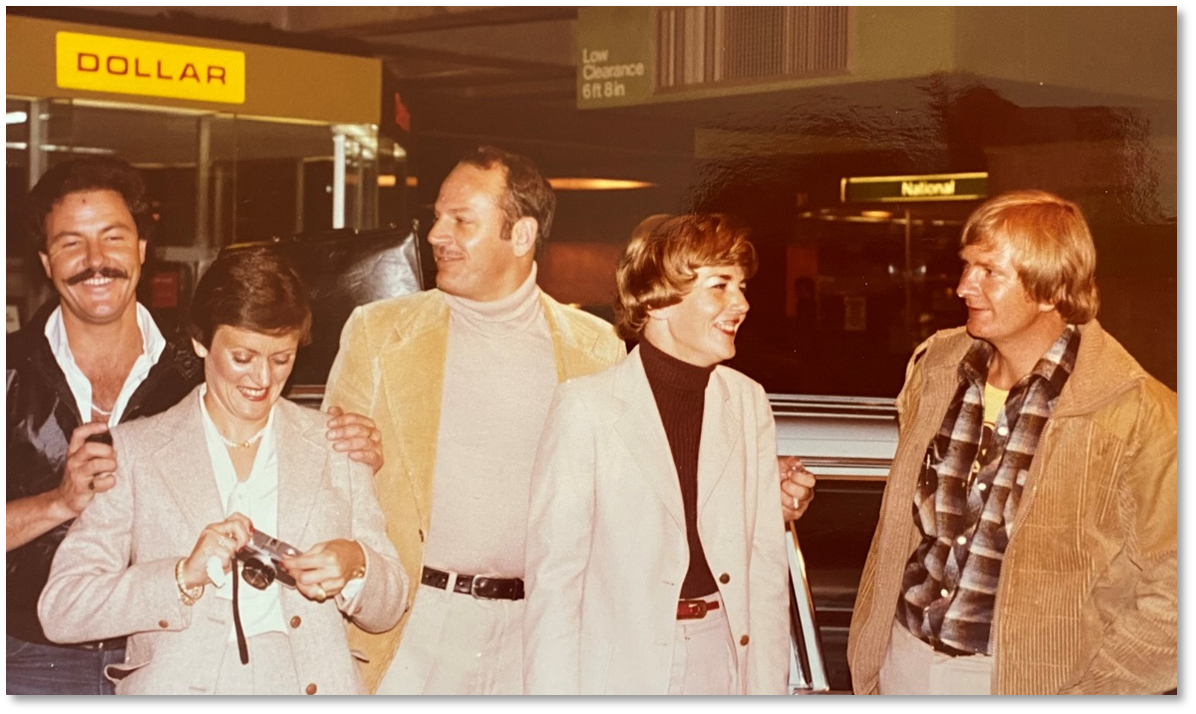
Lance Gwyther, Alta Bradford, Piet van der Merwe, Stella Howarth, Pieter van Heerden.
We flew to New York City, then connected onto United Airlines to Seattle, with a stop in Chicago. After checking into the Washington Plaza Hotel, we had a free day before our Boeing factory tour.
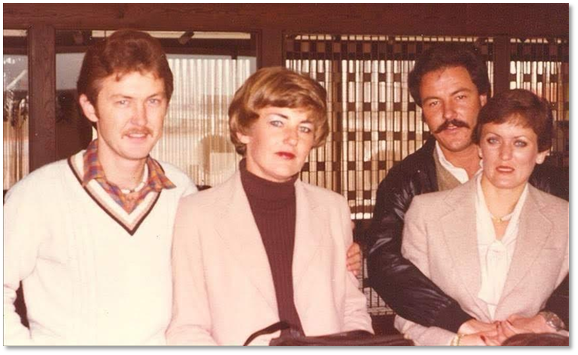
David Barras-Baker, Stella Howarth, Lance Gwyther, Alta Bradford.
That tour left an impression on me that I would carry for the rest of my life.
The sheer scale of the facility was staggering, rows of aircraft in various stages of construction, massive fuselage sections being manoeuvred into place, the unmistakable humming energy of an industry that never rests.
And then, there she was. ZS-SAS. Helderberg!
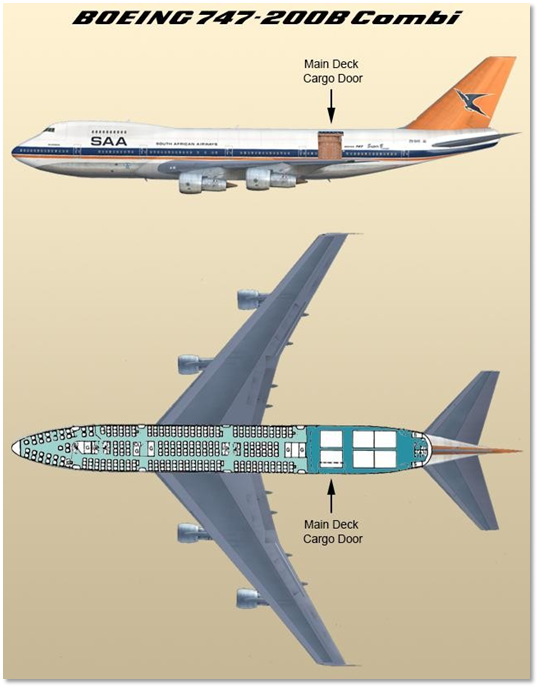
Her interior wasn’t fully fitted yet, just the first-class seats in the main and upper deck. The economy class seats were in the hold, to be installed later by the technical team in Johannesburg.
Standing inside that giant, open space, I took photos, dozens of them.
At the time, I was simply capturing a moment.
I never imagined that, years later, those very photos would become helpful in a crash investigation.
The Flight Home – A Record-Breaking Journey
The delivery flight was like nothing else.
We had about 25 first-class passengers, including the Minister of Transport, Pratt & Whitney executives, and Boeing representatives.
The aircraft was light, allowing us to carry enough fuel to fly nonstop from Seattle to Johannesburg, a rare feat for a commercial jet liner.
We were setting a record, though none of us thought much of it at the time. What I remember most was how new she felt.
The unscuffed carpets, the untouched galley surfaces, the clean, quiet hum of the engines. The unmistakable scent of fresh leather in first class.
None of us knew what the future held for this aircraft. The Helderberg was the newest member of our fleet.
And seven years later, she would be a name spoken in grief, whispered in suspicion, and etched into aviation history forever.
28 November 1987 – The Call That Changed Everything
Seven years had passed. I was living in Benoni when the phone rang at 4 AM. The sharp, urgent sound cut through my sleep like a knife.
I sat up, heart pounding, fumbling for the handset. Calls at this hour were never good news. “Report to Cabin Services immediately.”
No Explanation. No Details. Just Urgency.
I muttered something in acknowledgment and hung up the phone. My hands were already moving on instinct, reaching for my clothes.
Years of flying and wake-up calls had trained me to snap into action when duty called. But this… this was different.
A feeling settled deep in my gut. Something was wrong.
As I dressed, suburbia outside remained oblivious. Benoni at 4:00 AM was quiet, its streets empty except for the occasional distant hum of traffic.
I grabbed my car keys, my thoughts racing faster than my pulse.
- A major security incident?
- A hijacking?
- A disaster on the ground?
I didn’t know it yet, but in a matter of minutes, I would hear the words that would stay with me for the rest of my life.
“We’ve lost The Helderberg.”
A Name That Would Never Be the Same
Cabin Services was eerily silent when I arrived. The quiet murmur of voices inside the management offices was the only sound.
I pushed through the door and saw Roelf Verster, the Inflight Services Manager. His face was tense, his eyes fixed on a document in front of him.
Other senior personnel hovered nearby, their expressions a mix of confusion and dread. The room was too quiet. Too controlled.
I knew before anyone said a word, this was no drill. Then Verster looked up at me.
His voice was steady, but the weight behind his words was crushing.
“We’ve lost The Helderberg.”
The words hung in the air. Refusing to register. I stared at him.
“Lost? No. That wasn’t possible. Not a Boeing 747. Not with a crew like that.” “What do you mean… lost?”
Verster exhaled slowly, his eyes never leaving mine. “We have lost radio contact. Nothing. Just… gone.”
A silence stretched between us, thick and suffocating. I glanced at the clock. Just after 4:30 AM.
Flight SA 295, a Boeing 747-244M Combi named Helderberg, had been due to arrive in Johannesburg from Taipei via Mauritius.
It never made it. I took a slow breath, steadying myself. There were 159 people on board.
If it was gone, really gone, we were looking at the worst disaster in SAA’s history. I refused to believe it. Not yet.
The last known position:
134 nautical miles northeast of Mauritius. I clenched my jaw.
This meant one of two things:
- The situation had escalated so rapidly that the crew never had a chance to respond.
- Something catastrophic had happened mid-air.
Mauritius ATC had cleared The Helderberg for an emergency landing on Runway 14. But she never made it.
A hollow feeling settled in my chest. The aircraft had been on approach, descending toward safety.
If something had gone wrong, the pilots should have had time to react. But they didn’t. Why?
I turned back to Verster.
“We need to alert the cabin crew’s next of kin.”
“Yes. But we don’t have much time.”
I nodded. There was no wreckage yet. No physical proof. But in aviation crises, we dealt with hard facts and cold calculations.
By now, The Helderberg’s fuel reserves would be close to exhausted. If she wasn’t in the air, and she wasn’t on the ground.
There was only one possibility left. She was in the ocean.
Chapter 2
Breaking the News
We had minutes, maybe an hour at most, before the media got hold of the story. The moment the 6:00 AM news aired; we had to make sure that the next of kin weren’t hearing this for the first time on TV. That meant we needed to contact the families of the crew. Now.
I was handed a list of names. Cabin crew, people who had boarded that flight, expecting to be home by morning.
I took a breath, picked up the phone, and dialled the first number. A groggy voice answered.
“Hello?”
I gripped the receiver tighter. How do you say this to someone? How do you prepare them for the worst moment of their life?
“Good morning. This is David Barras-Baker from South African Airways. I’m so sorry to be calling you this early. I need to inform you that Flight SA295 is currently unaccounted for. We are doing everything we can to get more information. As soon as we have updates, we will contact you again.”
There was a silence. Then a sharp inhale.
“Missing?”
“Yes. We don’t have full details yet. But I wanted to reach out to you personally before you heard anything in the media.”
The words felt cold, distant. I wanted to say more, but I couldn’t. Not yet.
We repeated this call, over and over, reaching out to each crew member’s family before the SABC morning news bulletin.
I could hear the disbelief in their voices. The hope that maybe, just maybe, this was a mistake. I wished I could believe it too.
Chapter 3
Wreckage and the Search for Answers
28 November 1987 – Indian Ocean, Northeast of Mauritius
The first pieces of the Helderberg were spotted at sunrise. A lone Mauritian patrol aircraft, dispatched at first light, had been scanning the vast emptiness of the Indian Ocean, 154 miles southeast of the island. The ocean stretched infinite and indifferent, its surface broken only by whitecaps and shifting currents.
Then, just after 06:00 AM, the radio call came through.
“We have debris.”
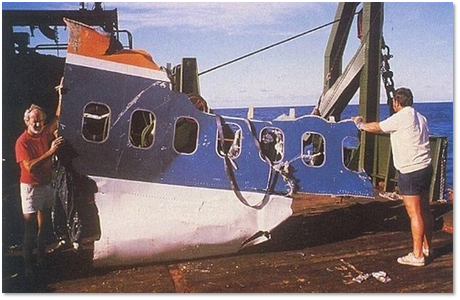
The search team onboard peered down from their aircraft; their eyes locked onto something unnatural floating amidst the waves.
A brightly coloured object, orange, possibly a seat cushion or life vest, drifted in the swells. Nearby, a long twisted panel of white fuselage bobbed on the surface, half-submerged. They made several passes, noting additional wreckage spread over several kilometers.
There were no signs of survivors. No life rafts. No flares. Nothing.
By mid-morning, Mauritian naval vessels and civilian fishing boats had arrived at the site. Over the next few days, pieces of the Helderberg would be painstakingly retrieved, catalogued, and sent to Johannesburg.
This was just the beginning of what would become one of the most complex aircraft wreckage reconstructions ever undertaken in South Africa.
The First Wreckage Arrives in Johannesburg
When the first crates of recovered debris arrived in Johannesburg, they were transported under tight security to a specially designated hangar near the SAA Technical Facility.
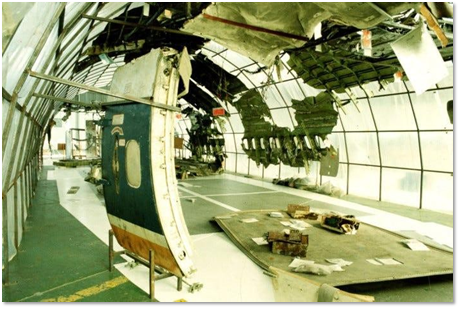
Inside the hangar, a large area had been cleared out and converted into what investigators called “The Wreckage Room.”
The entire floor space was marked with masking tape, carefully outlining the footprint of the Boeing 747.
Each recovered fragment, a piece of fuselage, a seat cushion, a charred oxygen mask, was laid out precisely where it would have been on the aircraft.
It looked like a ghostly outline of The Helderberg, a skeletal reconstruction built from the broken remains of something that had once soared with such majesty at 35,000 feet.
Standing there, walking through that space, was like walking inside the dead.
The Investigation Begins
Investigators, engineers, crash specialists, and aviation forensic experts, pored over each piece, searching for clues.
- What did the wreckage tell us about the final moments of Flight 295?
- What parts had broken up in the air?
- What was burned, and what was simply torn apart by impact?
- The biggest question of all was: Where had the fire started? o The answer, they hoped, lay somewhere amongst the wreckage.
- One thing quickly became apparent, the fire had been intense.
- Some metal components were charred black.
- Plastic cabin fittings had melted into unrecognisable lumps.
- Oxygen masks retrieved from the crash site had heat damage, evidence that the fire had likely spread into the main deck.
Then came another chilling discovery. Amongst the recovered items were several handheld fire extinguishers. Every single one of them was empty.
The Empty Fire Extinguishers, A Desperate Battle. This detail hit every investigator in the room like a gut punch.
- The crew had fought back.
- They had tried to put out the flames.
- And they had failed.
The realisation left a heavy silence in the wreckage room. There had been no automatic fire suppression system in the main deck cargo hold, only manual firefighting equipment. The crew had done everything they could, but it hadn’t been enough.
Why So Little Wreckage?
Despite the vastness of the ocean, surprisingly little of the aircraft had surfaced. Investigators estimated that at least 95% of The Helderberg was still on the seabed, four kilometres below the surface.
What had come up were the lightest, most buoyant objects, seat cushions, insulation panels, plastic interior fittings. Strangely, some pieces of metal fuselage had also floated to the surface.
Aviation engineers analysed them closely and found something alarming, some of the fuselage sections showed signs of heat exposure.
This was critical evidence. It suggested that the fire had been so intense that it had weakened the metal itself.
Had the heat been enough to cause a structural failure in-flight? If so, this might explain why the aircraft broke up so violently, leaving behind only fragments.
The Mystery of the Tail Section
There was another critical clue. Amongst the few bodies recovered, all had been seated near the rear of the aircraft, in the last few rows before the tail section.
This suggested one terrifying possibility, that the tail had separated before the aircraft impacted the water.
The tail of a Boeing 747 houses the flight data recorder (FDR) and cockpit voice recorder (CVR), the black boxes.
If the tail had detached before the final moments, that would explain why there were no cockpit voice recordings of the last seconds of The Helderberg’s life.
The aircraft had lost its recorders before it hit the water. This only deepened the mystery.
Chapter 4
The Wreckage Room
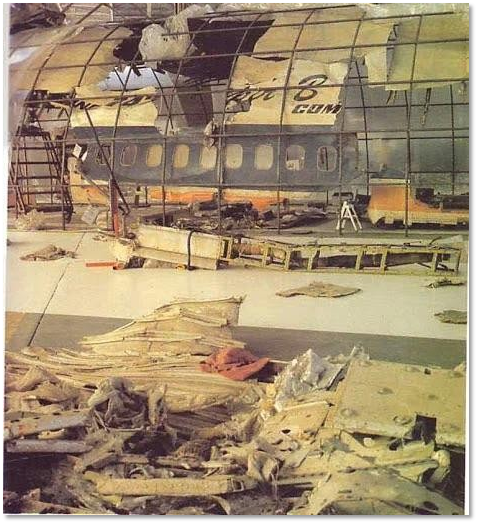
The ocean had given up its first clue.
It was a small piece of insulation, floating near the whitecaps of the Indian Ocean, some 248 kilometers southeast of Mauritius. At first glance, it could have been mistaken for sea debris, just another forgotten remnant tossed by the waves.
But this was no ordinary debris. This was from The Helderberg. It didn’t take long before more wreckage began to surface.
Scraps of cabin paneling. A torn piece of seat fabric. Fragments of cargo pallets. And then, the unmistakable discovery that sent a chill through everyone involved in the search, an oxygen mask, scorched and partially melted.
By now, we knew. There would be no survivors.
The Moment Reality Sank In
Back in JSA, we were running on adrenaline and duty, not sleep. The initial shock had passed, replaced by the numbing routine of logistics, protocol, and hard decisions.
The moment of undeniable realization came when a senior engineer from flight operations walked into the room. He had been doing calculations in the background while we were coordinating logistics.
He stood at the edge of the room, waiting for a lull in conversation. When the room finally quieted, he spoke.
“We’ve gone past fuel exhaustion.” A ripple of silence spread across the room.
“What are you saying?” someone asked, even though we already knew the answer.
“Even if they had been flying blind, even if all radio systems had failed, even if they were circling aimlessly over the ocean… there is no fuel left.
The Helderberg is no longer in the air.”
The last sliver of irrational hope, that maybe, just maybe, they had ditched successfully, that they were floating somewhere in the vast expanse of ocean, was gone.
Now it was a recovery mission.
The Wreckage Room
Days passed. Wreckage trickled in from the search teams, some floating debris, some pulled from the deep.
The idea was simple. Every piece recovered from the ocean would be placed within this grid, allowing investigators to reconstruct as much of the aircraft as possible.
It looked like a giant jigsaw puzzle, except this wasn’t some harmless weekend pastime. This was an autopsy, and our victim was a Boeing 747.
I remember walking into that room for the first time.
The air was stiflingly quiet, except for the occasional shuffle of boots against the concrete floor. The wreckage was laid out systematically, engineers studying each twisted panel, each fragment of seatbelt, scorched bits of cargo.
A team was hunched over a badly burned section of fuselage, the metal warped from intense heat. They weren’t speaking, just studying it, tracing the edges of the damage with their gloved fingers.
Near the back of the room, a collection of oxygen masks had been placed on a long table. Some were still partially attached to their supply hoses, others had been ripped away entirely. Scorched. Melted. Useless.
That was one of the most chilling realizations, the crew and passengers had fought to survive. They had pulled down their oxygen masks. They had tried to breathe.
But the fire had been unstoppable.
The 19 Pieces That Told a Story
One of the senior engineers, Trevor Perfect, approached me as I examined the wreckage. He held a clipboard covered in notes.
“David, those interior photos you took on The Helderberg’s delivery flight…” “We enlarged some of them. They helped us match 19 specific pieces of interior panelling to their exact locations in the aircraft.”
The photos I had taken in Seattle, 1980, of a brand-new, factory-fresh Helderberg, were now helping us piece together its final moments.
Victim Identification and the Kenyons Team
While engineers worked on the wreckage, another team had an even grimmer task, identifying the human remains that had been recovered.
Under international aviation law, next of kin are not allowed to identify bodies. All identifications had to be forensic.
SAA had an agreement with Kenyons International, a specialist disaster recovery company based in London.
Their team arrived, bringing forensic odontologists, pathologists, and forensic investigators. I was assigned to work closely with them.
One of the first things we had to do was confirm the correct passenger list. I had assumed this would be straightforward, after all, wasn’t the manifest final? It wasn’t.
There were at least four different versions of the passenger list:
- The SAA manifest.
- The Customs manifest.
- The travel agents’ records.
- The final boarding records from Taipei.
There were subtle differences between them, names slightly misspelled, last-minute seat changes, no-shows.
We had to merge and verify all the lists, ensuring that every single person on board was correctly accounted for.
By 8 AM, families of passengers were calling us demanding answers we didn’t have.
The Sticky Dots and Flip Charts
Organising the Identification Process
The next stage was victim identification, a process that would take weeks.
To manage it, we set up a makeshift war room in the flight operations building, where we used massive flip chart pads stuck to the walls.
Each victim’s name was written by hand on these charts.
Next to their names, we placed coloured sticky dots to track progress:
- Red for confirmed identities
- Yellow for pending forensic evidence
- Green for personal details received from families
- Black for unidentified remains
This colour-coded system became our way of handling the logistical nightmare unfolding before us.
The dots moved, changed colours, as new information came in from our forensic team in Mauritius.
But nothing prepared us for the personal details we had to ask the families.
The SAA Representatives – Asking the Impossible
South African Airways had station managers around the world, and we called on every one of them to visit the next of kin in person.
Each SAA rep was given a delicate and painful task:
- Express condolences on behalf of the airline.
- Deliver flowers and a formal letter of sympathy.
- Gather crucial identification details.
But this wasn’t just asking about birthdays or middle names.
We had to extract the most specific, intimate details possible:
- Did they have any scars?
- Birthmarks? Tattoos?
- Were they wearing jewellery? A wedding ring?
- Had they ever had major surgery?
- For men, were they circumcised?
It felt invasive. But without bodies, without full remains, these were the only clues we had.
Every single piece of information was faxed to our team in Mauritius, where forensic pathologists and odontologists were working around the clock.
The Reality of the Search
In the end, only eight bodies were recovered intact. Everything else was fragmented remains, scattered across miles of deep ocean.
The final confirmed identifications came down to:
- Recovered remains
- Dental records
- Small personal effects, like rings or watches And then, after weeks of work, it was over.
The Helderberg’s passengers and crew were gone. And the official investigation was about to begin.
The Cases of Mrs. Swanepoel
and Miss Lauren Pillemer
One of the most difficult moments came when we received a fax from Mauritius.
“We may have found Mrs. Swanepoel. Need next of kin to confirm a description of her ring.”
I hesitated. How do you ask a grieving son to describe his mother’s wedding ring, without telling him why?
We called the Swanepoel household in Kempton Park. The eldest two brothers couldn’t bring themselves to talk. The youngest, a boy not even in his teens, answered instead.
His voice trembled as he described it, a silver ring, shaped like a pincushion, with tiny silver pins embedded around it. It matched perfectly.
We never confirmed it with him. We simply relayed it to the Kenyons team and let Gert van der Veer, our SAA CEO, make the official notification.
Then came the case of Miss Lauren Pillemer.
Kenyon’s team needed to confirm whether she had scars under her breasts, either from breast augmentation or reduction surgery. Her mother denied it.
“No. She never had anything like that.”
But then a short while later, her best friend called us separately.
“She never told her mother. But yes… she did have a breast procedure.”
This is why forensic identification mattered, because even those closest to the victims sometimes didn’t know everything.
Conclusion – The Beginning of Answers
By now, we had confirmed the aircraft was lost. The wreckage was telling us a story, of a fire that raged out of control, of a desperate fight for survival, of a plane that came apart mid-air.
The next step? Finding out why. And that would prove to be the hardest truth of all.
Chapter 5
The Fire That Should Never Have Happened
The wreckage had already told us something horrifying.
There had been a fire. A raging, unstoppable inferno. But now, we had to answer two questions:
- What started it?
- Why couldn’t they put it out?
These weren’t casual questions. They were the key to understanding why 159 lives had been lost.
The forensic work began in earnest, with specialists combing through the debris, looking for signs of extreme heat damage, charring, and chemical residue.
The Evidence of Fire
The first real confirmation came when they found sections of the fuselage that were warped and blackened, but not just on the outside.
The inside was scorched.
That was a critical detail. Fires inside an aircraft’s structure are far deadlier than anything external. If the flames had started on the exterior, say from an engine failure or fuel line rupture, it would have followed a predictable pattern.
But this? This started inside. And then we got something worse. The oxygen masks found floating in the wreckage were melted.
I stood over one of them in the wreckage room. Its once-pristine plastic had deformed into a grotesque shape, the edges curled as if they had tried to escape the flames.
Another piece of evidence was a badly scorched section of cargo bulkhead, found among the recovered debris. Some metal components had partially melted, meaning the fire had been burning at an extreme temperature.
And then came something that made my blood run cold. Forensic examination of some of the victims’ lungs found soot deposits in their airways.
That meant one thing, they had been alive and breathing when the cabin filled with smoke. They fought to survive until their last moments.
The Desperate Battle to Fight the Fire
One of the hardest things to process was this:
The crew tried everything. We knew this because every single handheld Halon fire extinguisher recovered from the ocean was empty.
They had used them all. Think about that. They had fought, desperately, with every last resource they had.
At some point during that battle, they must have realized they were losing.
The smoke must have been so thick that they could barely see each other. The fire must have raged behind the cargo bulkhead, consuming whatever fuel source it had.
The thought haunted me, how long did they keep fighting before they realized there was no stopping it?
And then came the biggest mystery of all. What Started the Fire? Fires on aircraft don’t just happen.
The Boeing 747 was designed with fire-resistant materials, protective coatings, and multiple layers of insulation. Cargo holds were reinforced to withstand the intense heat of cargo fire, giving the crew time to act.
And yet, The Helderberg burned. There were two leading theories.
Electrical Fire from Dry Arcing
One of the recovered wreckage pieces was a section of ceiling panel from the cargo area. It was badly burned, but more importantly, the wiring above it showed signs of dry arcing.
Dry arcing happens when electrical wiring insulation degrades, causing sparks between the wires. If you have a fuel source nearby, it can ignite.
This was a major concern in 747s at the time, some older aircraft had wiring insulation that became brittle over time, leading to short circuits.
Could this have been the cause?
There was supporting evidence, similar wiring failures had caused fires in other aircraft. Boeing even changed the materials in later aircraft models to reduce the risk.
But there was another theory. One that was far more controversial.
The Cargo Theory – What Was in the Hold?
The main deck cargo hold of a 747 Combi wasn’t just another storage area. It was a secure main deck compartment, with a reinforced bulkhead, accessible from the passenger section by a locked door.
And yet, this was where the fire started. The official cargo manifest listed mostly normal freight, electronics, textiles, industrial parts.
But there were rumours. Some suggested that a highly flammable, undeclared substance was on board.
One of the most persistent theories was that the aircraft was carrying rocket fuel oxidizers, specifically red mercury or ammonium perchlorate, both highly volatile.
If true, this meant that something was on board that should never have been there. And here’s where the mystery deepens.
The Missing ZUR Tape – The Call That Disappeared
There was one last known transmission from The Helderberg. It didn’t go to air traffic control. It went to SAA Flight Operations on our HF frequency, ZUR.
This was unusual. Crews typically used standard aviation frequencies for operational messages. The ZUR frequency was used for company dispatch communications, meaning it wasn’t publicly monitored like ATC transmissions.
The final known transmission from Captain Dawie Uys was on ZUR.
Then, radio silence. After the crash, investigators requested the ZUR tape recordings from SAA’s operations.
And that’s where things get strange. The tape vanished. We were told it had been lost. Lost?
How does one of the most crucial pieces of evidence in an aviation disaster investigation just disappear?
There were two possibilities:
- It was accidentally erased or misplaced in the chaos after the crash.
- It was deliberately removed because of what was on it. I’ve spent years thinking about that.
If it had been a routine operational check-in, why would it matter?
But if Captain Uys said something on that frequency, something about his cargo, or a fire he couldn’t control, then suddenly, its disappearance makes a lot of sense.
The official report never clarified what was in that last transmission.
And without that tape, we may never know.
Unanswered Questions:
By this point in the investigation, we knew the basics.
- A fire started in the main deck cargo hold.
- The crew fought it with everything they had.
- The fire intensified, consuming oxygen, and smoke filling the cabin.
- Some passengers died from smoke inhalation before impact.
- The aircraft broke apart before hitting the ocean.
But we still didn’t know:
- What ignited the fire?
- Was there a hidden cargo onboard?
- Why did the ZUR tape disappear?
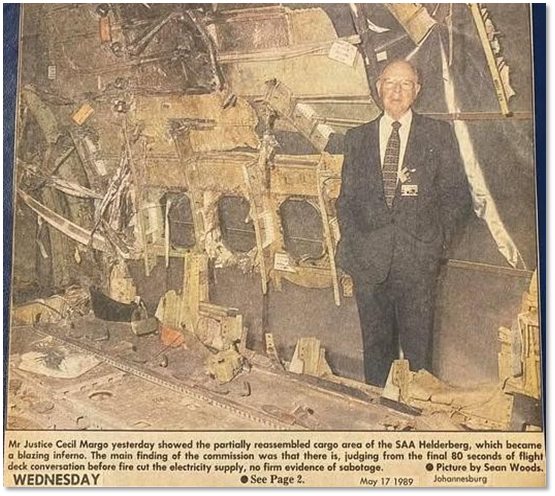
Justice Margo, who led the inquiry, later admitted:
“We still don’t know what caused the fire, and we don’t know why they couldn’t put it out.”
That statement has haunted me ever since.
Chapter 6
The Political Storm and the Burden of Identification
The Helderberg was now a wreck at the bottom of the ocean.
The immediate aftermath of the crash had been chaotic, emotional, and deeply personal. But as the search for answers began, it became something else entirely.
It became political. And in apartheid-era South Africa, politics was a beast of its own.
The Immediate Reaction was Shock and Silence Officially, South African Airways released a brief, carefully worded statement:
“With deep regret, we confirm the loss of Flight SA 295, a Boeing 747244M Combi, en route from Taipei to Johannesburg via Mauritius. The cause of the accident is under investigation. Our thoughts are with the families of the passengers and crew.”
A neat, professional response. But inside SAA, inside our crisis response rooms, the reality was far messier, far more painful, and far more personal.
And here was the whisper on the wind:
“Was The Helderberg carrying something it shouldn’t have been?”
The Sanctions-Busting Theory – A Dangerous Cargo?
Within days of the crash, rumours began to spread. Some claimed The Helderberg was carrying a secret, undeclared cargo, something so sensitive that it had to be kept off the official cargo manifest.
The most controversial theory was that The Helderberg was being used for sanctions-busting operations, secretly transporting military technology, missile components, or even highly volatile substances into South Africa.
The evidence?
- The fire started in the main deck cargo hold, an area usually reserved for sensitive or valuable cargo.
- The fire was extreme and uncontrollable, more intense than a typical electrical fire.
- The ZUR tape vanished, the last radio call between Captain Uys and Flight Operations.
There were whispers in diplomatic circles that The Helderberg may have been carrying ammonium perchlorate, a rocket fuel oxidizer used in ballistic missile programs.
If this was true, it would mean:
- The South African government was illegally smuggling military materials.
- The cargo may have ignited mid-flight, causing the fire.
- There was a reason to cover it up.
But this was all speculation. No hard evidence was ever produced. Still, the theory was too big to ignore.
And when the Margo Commission was formed, many were watching to see if these questions would even be asked.
The Margo Commission – The Official Investigation
To investigate the crash, the South African government appointed Justice Cecil Margo, a respected judge with a history in aviation law.
At first, this seemed like a good thing.
Margo was seen as independent, professional, and highly knowledgeable, and he had some previous crash investigation experience.
But there was a problem. Margo was a government man. His role was not just to find the truth, but to protect South Africa’s reputation.
What the Investigation Found
The Margo Commission did confirm a few key things:
- The fire started in the main deck cargo hold.
- The crew fought desperately to put it out.
- The aircraft likely broke apart before impact.
But then came the glaring omissions.
1. No Conclusive Cause for the Fire
The biggest hole in the report was that it never identified what caused the fire.
Despite weeks of investigation, despite forensic analysis, wreckage examination, and fire behaviour modelling, the commission simply concluded:
“The cause of the fire could not be determined.”
That was unacceptable. A fire on a Boeing 747 doesn’t just happen.
Either it was an electrical failure, or there was something onboard that ignited.
But the report never explored the second possibility in depth.
2. The ZUR Tape Was Never Found
The investigation into the missing ZUR tape was a joke.
- No one could explain where it went.
- There was no official record of who last handled it.
- There was no backup recording.
It was as if it had never existed. The Margo Commission never pushed hard on this issue. Which led many to ask, what was on that tape?
3. No Examination of Sanctions-Busting Cargo
Not once in the official report did the commission seriously investigate whether the aircraft had been carrying undeclared cargo. It was the biggest question, and yet, it was ignored.
Boeing’s Response – Corporate Damage Control
Boeing had a different priority, to protect itself.
The idea that a Boeing 747 could catch fire mid-flight and break apart was not something they wanted in the public narrative.
So, their response was carefully managed:
- They worked with investigators, providing data on past 747 electrical failures.
- They pushed the electrical fire theory, citing wiring issues in previous aircraft.
- They avoided any discussion about the possibility of dangerous cargo.
Behind closed doors, Boeing quietly recommended changes to 747 fire safety systems:
- Improved wiring insulation to prevent dry arcing.
- Enhanced fire suppression systems in cargo holds.
- Increased crew training for inflight fire emergencies.
But publicly?
They said nothing about it being a design flaw.
The Final Verdict – A Disappointing Conclusion
In the end, Justice Margo delivered his findings.
- The Helderberg caught fire mid-flight.
- The crew fought bravely but could not stop it.
- The aircraft broke apart and crashed into the ocean.
- The cause of the fire remains unknown.
And with that, the official investigation was closed. But not everyone was convinced.
Theories about government involvement, missing cargo, and hidden truths never faded.
For many of us, the biggest questions were never answered. And some of them, perhaps, never will be.
Chapter 7
The Legacy of The Helderberg
Time moves on – But some things never fade.
The Helderberg disaster was not just another aviation accident. It wasn’t a case of simple mechanical failure, pilot error, or bad weather. It was something more complex, more troubling, and more unresolved.
And for those of us who were there, those who saw the wreckage, who spoke to the families, who tried to piece together what really happened, the questions never truly left us.
The Immediate Aftermath – SAA Tries to Move Forward
In the weeks following the final report, South African Airways did what every major airline does after a disaster, it tried to move on.
- The route between Taipei and Johannesburg was re-evaluated.
- Boeing made subtle but important safety modifications to its fire suppression systems.
- Crew were given enhanced training in in-flight fire emergencies. But inside the company, a shadow hung over all of us.
I remember walking through the Cabin Services building one morning and reflected on the crew roster, we had lost an entire compliment of crew.
Cabin crew who had once shared flights with us, laughed in crew lounges, stayed up late swapping stories in foreign hotels, they were gone.
Their lockers were still there. Spare uniforms, bags and belongings, but they would never return to claim them.
Some of us found ways to rationalize it.
“It was an accident. A tragedy. A terrible failure of circumstances.”
But others? They weren’t convinced.
Because some of us knew too much. We knew that the official story wasn’t complete.
Did the Investigation Really End?
Publicly, Justice Margo’s report closed the case.
But behind the scenes, there were whispers of continued investigations, both inside South Africa and internationally.
There were rumours that intelligence agencies were quietly looking into the possibility of a cover-up.
Some key questions never went away:
- Why was the ZUR tape lost?
- Why did the investigation never fully examine the cargo contents?
- If the fire was electrical, why were certain Boeing wiring modifications quietly introduced soon after?
We were told to accept the conclusions. But some of us couldn’t.
What Changed in Aviation?
The loss of The Helderberg led to several critical changes in aviation safety, some official, some unofficial.
- Fire Suppression & Cargo Regulations Tightened
- The Combi aircraft design, which allowed cargo to be stored directly behind the passenger section, began to disappear from commercial use.
- Halon fire suppression systems were upgraded, but more emphasis was placed on fire prevention rather than just suppression.
- Boeing’s Quiet Modifications
- Boeing introduced better wiring insulation, reducing the risk of dry arcing fires in older 747s.
- Main deck cargo compartment materials were changed to be more fire-resistant.
- ICAO & FAA Introduced Stricter Cargo Declarations
- Airlines were put under greater scrutiny regarding what they were carrying.
- It became far more difficult for sensitive or undeclared cargo to fly on passenger aircraft.
But none of this helped the families of the 159 people who had died. For them, there was no comfort in policy changes. They wanted truth.
And for many of them, they never truly got it.
The Families – Grief & Frustration
I remember a colleague recalling a private memorial for some of the families in Johannesburg.
One woman, the mother of a flight attendant lost on The Helderberg, stood in front of a small group of us and spoke.
Her voice didn’t break. It was steady.
“My daughter was on that flight. She died in the dark, in the smoke, trying to do her job. I don’t care about technical reports. I don’t care about theories. I just want to know, did she suffer? And was her death avoidable?”
The room was silent. No one had an answer.
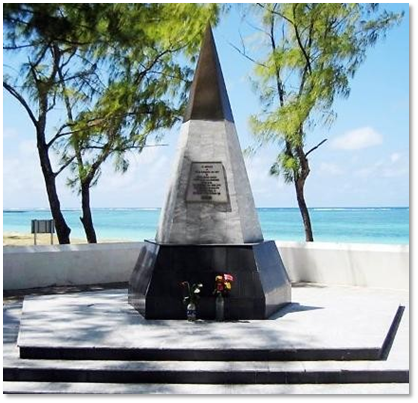
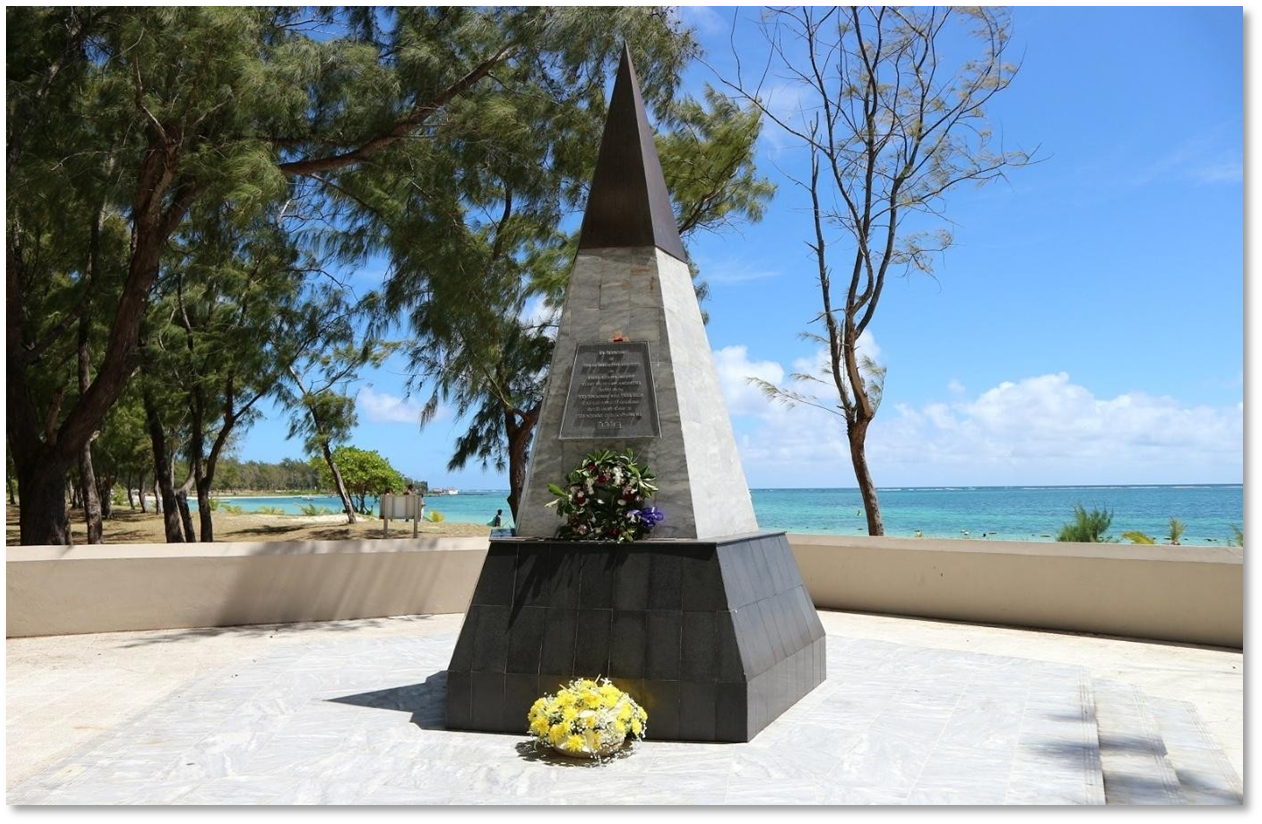
The Helderberg Memorial in Mauritius
Justice Margo’s Private Words
Before his passing in 2000, Justice Cecil Margo was asked whether he truly believed his commission had uncovered everything about the crash. His response was unsettling.
“We found what we were allowed to find.”
A cryptic answer. One that suggested even he had faced limitations.
Theories That Never Went Away
In the years since the crash, the three main theories have never truly disappeared.
- The Official Theory (Electrical Fire):
- A short circuit in the main deck cargo hold wiring ignited a fire.
- The fire spread rapidly, overwhelming the crew.
- The Cargo Theory (Sanctions-Busting):
- Undeclared cargo (rocket fuel components, explosives, or hazardous chemicals) ignited. o The South African government covered up the true nature of the cargo to avoid international scandal.
- The Sabotage Theory:
- Some have speculated that The Helderberg was deliberately targeted, either by internal forces or foreign operatives, to prevent whatever was onboard from reaching South Africa.
None of these have ever been proven. But none of them have ever been fully disproven, either.
Final Thoughts – What I Believe
I’ve spent decades reflecting on this. I have no doubt that the crew fought bravely. I have no doubt that they did everything possible. But I do doubt that we were given the full truth.
There are too many gaps. Too many missing pieces. The fact that so much evidence disappeared, the fact that the fire’s cause was never identified, the fact that Margo himself admitted his investigation had limits – these are things that cannot be ignored.
The last words of Captain Dawie Uys – spoken on a missing tape that no one can find, may be the only thing that could ever tell us what truly happened.
And until that tape surfaces, if it ever does, the Helderberg will remain one of aviation’s most haunting mysteries.
Chapter 8
The Weight of Memory
I never wanted to carry this story.
But some stories cling to you, whether you like it or not. The Helderberg was more than a disaster, more than an investigation, more than a historical event. It was a moment in time that left a scar on those who were part of it.
A scar I have carried for decades. It started with a phone call at 4 AM. And all these years later, the echoes of that call still ring in my head.
The Burden of Knowing
Some of us had the privilege of distance, people who read the headlines, who watched the news reports, who eventually moved on.
But for those of us who were inside it, who stood in the wreckage room, who sifted through the debris, who made the calls to families before they heard it on the morning news, there was no moving on.
This wasn’t just a job. It wasn’t just a chapter in a book of aviation disasters. This was people.
This was colleagues I had worked with, crew I had trained, friends I had shared flights with.
This was victims who had names, families, lives waiting for them. And every single one of them was gone.
The Questions That Will Never Be Answered
You would think, after all this time, that I would have peace about what happened. But I don’t.
Because too much is still missing. And not just the ZUR tape.
- The cause of the fire remains unknown.
- The full cargo list remains suspect.
- The political undercurrents remain buried.
Justice Margo’s words still haunt me:
“We found what we were allowed to find.”
That’s the thing about truth, it only matters if someone is willing to reveal it. And in this case, not everything was revealed.
The Families Deserved Better
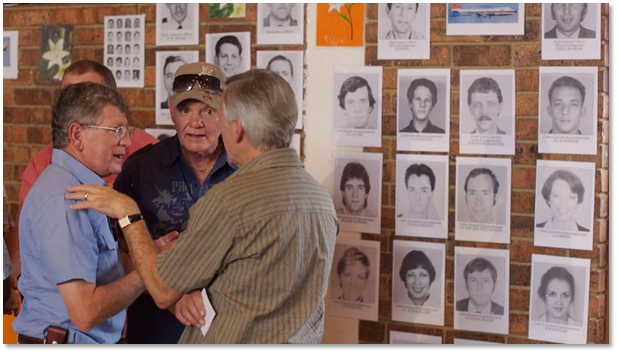
In the aftermath, families broken apart by grief, searching for meaning in a tragedy that had none.
Mothers and fathers, widows and children, standing at memorial services with no remains to bury, just names etched into metal plaques.
Brothers and sisters clinging to the last messages, the last photos, the last memories of their loved ones.
And they ask the same question over and over again:
“Why?”
Why did this happen? Why didn’t the crew have a chance? Why wasn’t the full truth ever given to us? Even today, some of them are still waiting.
What Time Hasn’t Erased
I have lived a full life since that day. But no matter where I have gone, no matter what I have done, The Helderberg has never left me.
I still wake up some nights, hearing the phantom ring of that 4 AM phone call. I still picture the wreckage room, the twisted remains of a once-proud aircraft laid out like the broken bones of a giant that fell from the sky.
I still think about the faces of the crew members, the people who boarded that flight believing it was just another routine flight, not knowing they would never set foot on solid ground again.
And sometimes, when I hear an aviation related radio transmission, I still wonder, Where is that missing tape?
Who heard the last words of Captain Dawie Uys? Who made the decision that it would never be found?
The Sky Never Forgets
Aviation moves forward. New aircraft are built. Old tragedies fade from public memory.
But the sky? The sky never forgets. The Helderberg’s story is written in its clouds, in the currents of the air, in the legacy of those who died.
And as long as people like you and I remember, as long as we ask the hard questions, as long as we keep this story alive, then the truth will never die.
The flight is over. The wreckage is gone. The official reports have been filed.
But The Helderberg still flies.
Not in the air. But in memory.
Epilogue – What I Know For Certain
I don’t claim to know every answer.
But I do know this:
- The crew did everything they could. They fought until the end.
- The passengers didn’t die alone, they were with each other, together in their final moments.
- The truth is bigger than any official report.
- Someone, somewhere, still knows what was on that missing tape.
Maybe one day, we will know it too. But until then, we honour them. By remembering. By telling their story.
By ensuring that, no matter how much time passes, The Helderberg is never forgotten.